
Plant database
A living library of African indigenous food plants — growing guides, nutritional profiles, local names, and market potential. Updated as the Shiriki pilot farm generates field data.
Legume · Climbing
Lablab bean
Lablab purpureus
One of the oldest cultivated plants in Africa and Asia — the climbing bean with extraordinary purple flowers, edible leaves, and a seed that has fed civilisations for millennia.
About this crop
Lablab is one of the most visually striking plants in the Shiriki collection — and one of the most historically significant. It has been cultivated in Africa, India, and Southeast Asia for at least 4,000 years, and is among the few crops that is truly pan-tropical in its cultural significance. In South Africa, it is less well known than cowpeas, which makes it a significant opportunity: chefs who encounter lablab for the first time consistently respond with excitement.
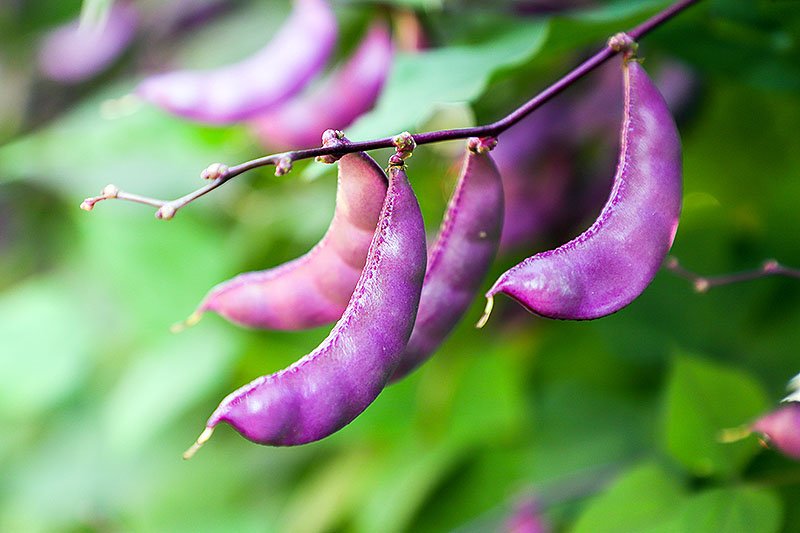
The plant produces deep purple flowers — genuinely beautiful, not just agriculturally interesting — followed by flat, often purple-tinged pods containing the seeds. Some varieties have entirely green pods and white seeds; others are vibrantly purple throughout. The climbing habit means lablab can use a tunnel frame as support, producing high yields from vertical space.
Like cowpeas, lablab fixes nitrogen in the soil — though at a lower rate. Its primary value is as a dual-use crop: fresh leaves and young pods are eaten as vegetables, mature beans are dried and cooked as a legume.
Growing guide
Lablab is a warm-season climber that needs strong support — a tunnel frame, trellis, or fence. Direct-sow seeds 3–5cm deep after the last frost, spacing plants 30–50cm apart along the support structure. It germinates well in warm soil (above 18°C) and grows vigorously in full sun. It tolerates drought once established but performs best with consistent moisture during flowering and pod set.
Young leaves and tender growing tips can be harvested from about 6 weeks. Young flat pods (before seeds develop) are edible raw or cooked like green beans. Mature seeds should be thoroughly cooked — raw or insufficiently cooked lablab beans contain antinutritional factors that cause digestive distress. Boil for at least 20 minutes, or soak overnight before cooking.