
Plant database
A living library of African indigenous food plants — growing guides, nutritional profiles, local names, and market potential. Updated as the Shiriki pilot farm generates field data.
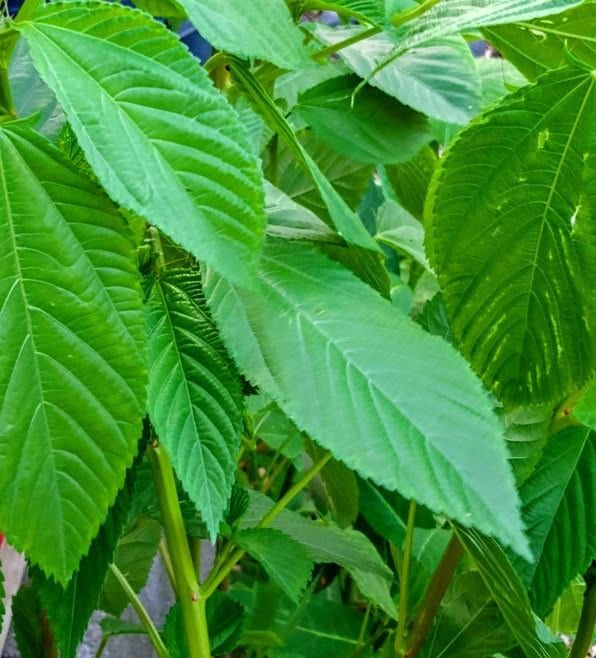
Leafy green · High value
Jute mallow
Corchorus olitorius
Ewedu — the mucilaginous, intensely nutritious leafy green that defines West African cuisine and remains almost entirely unavailable fresh in Johannesburg.
About this crop
Jute mallow is one of the most significant vegetables in West and East African cuisine, and one of the most underrepresented in Gauteng’s formal food supply. In Nigeria, ewedu soup is a daily staple — prepared by blending the cooked leaves into a viscous, silky green soup served with amala (yam flour) or rice. In Kenya, mrenda is a beloved leafy green cooked with onion and tomato. In Egypt and the Middle East, molokhia (the same plant) has been eaten since the time of the pharaohs.
The mucilaginous texture of jute mallow — the viscous, slightly slippery quality that comes from the leaves’ natural polysaccharides — is not incidental. It is the defining quality that makes ewedu, molokhia, and mrenda what they are. This is the same quality that makes okra valuable in cooking: it thickens soups and stews naturally without any added starch.
Across Johannesburg and Gauteng there are hundreds of thousands of West African, East African, and Middle Eastern households who eat or have eaten jute mallow regularly — and who currently cannot source it fresh locally. It is imported dried or simply not available. A fresh jute mallow supply in Johannesburg is an essentially uncontested market.
Growing guide
ute mallow is a warm-season crop that genuinely needs heat to perform. In Gauteng, it must be grown in a tunnel during the cooler months — it will die at temperatures below 5°C and struggles below 15°C. In spring and summer (October–March) it can grow outdoors in full sun with consistent moisture.
Direct-sow seeds thinly in prepared beds, covering lightly with 1–2cm of soil. Germination occurs in 5–10 days in warm soil. Once plants are 20–25cm tall, begin harvesting the growing tips and young leaves. The plant responds to regular cutting by producing multiple new shoots — making it a reliable cut-and-come-again crop for consistent weekly harvest.
Water consistently — jute mallow wilts quickly in dry conditions and does not recover well from stress during active growth. Mulching around plants reduces water loss significantly.
Culinary uses
Fresh leaves are stripped from stems and either blended raw (for traditional ewedu soup — the leaf is blended with water and cooked briefly), or wilted and cooked whole as a side vegetable. The mucilaginous texture intensifies with cooking. Dried leaves can be crumbled into soups and stews as a thickener — a significant value-addition opportunity for surplus production.