
Plant database
A living library of African indigenous food plants — growing guides, nutritional profiles, local names, and market potential. Updated as the Shiriki pilot farm generates field data.
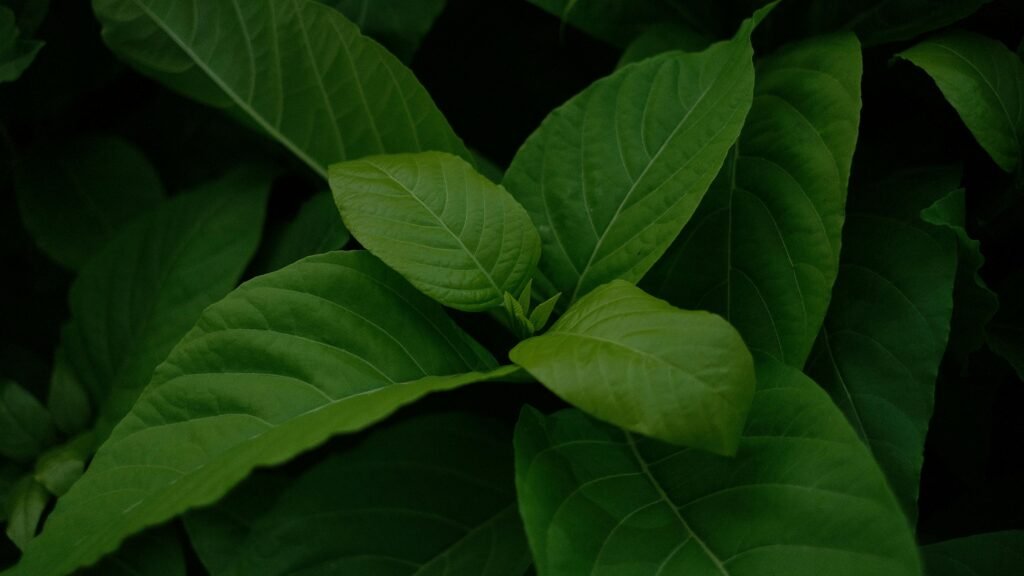
Leafy green · Medicinal · Perennial
Bitter leaf
Vernonia amygdalina
A perennial shrub whose deeply bitter leaves are both a cultural cornerstone of West African cuisine and one of the most widely researched medicinal plants in Africa — antimalarial, anti-diabetic, and anti-inflammatory properties documented in over 100 peer-reviewed studies
About this crop
Bitter leaf is a perennial shrub — unlike most of the crops in the Shiriki collection, once established it provides harvests for years without replanting. It grows to 2–10m in its natural form, but is managed as a shrub under 2m in cultivation by regular cutting. Its distinctively bitter leaves are used across West and Central Africa for one of the most widely recognised Nigerian dishes, ofe onugbu (bitter leaf soup), as well as as ndolé (Cameroon’s national dish), and in numerous traditional medicinal preparations.
The bitterness comes from sesquiterpene lactones and other bioactive compounds that are also responsible for its medicinal properties. Research across multiple African universities and international institutions has documented antimalarial, antidiabetic, antioxidant, and anti-inflammatory properties. It is one of the most scientifically studied African food plants.
For cultivation, the leaves are washed and kneaded vigorously to reduce bitterness before cooking, or briefly blanched. Some recipes retain the full bitterness as a flavour feature.
Growing guide
Bitter leaf is propagated from stem cuttings — cut a 20–30cm section, remove lower leaves, plant directly in moist soil. It roots easily. It prefers warm, humid conditions and does not tolerate hard frost, though established plants in Gauteng can survive mild winters by dying back and resprouting from the root. In a tunnel, it grows year-round. Plant in rich, well-drained soil with good organic matter. Harvest outer branches regularly — this encourages bushy, productive growth and keeps the plant at a manageable size.