
Plant database
A living library of African indigenous food plants — growing guides, nutritional profiles, local names, and market potential. Updated as the Shiriki pilot farm generates field data.
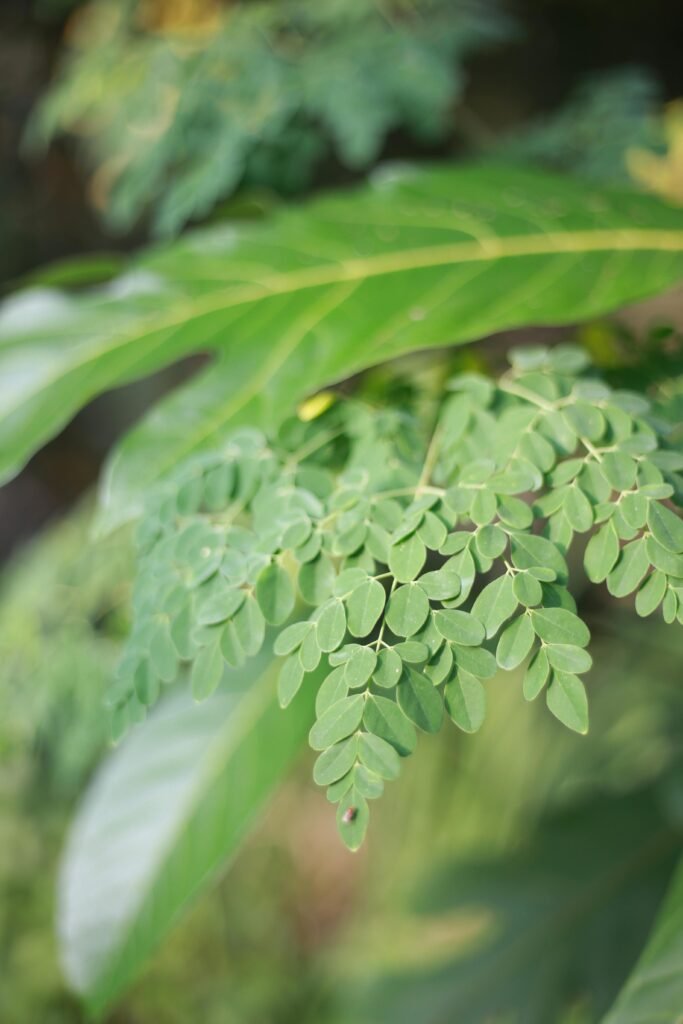
Tree · Superfood · Medicinal
Moringa
Moringa oleifera
Gram for gram, moringa contains more vitamin C than oranges, more calcium than milk, more protein than eggs, and more potassium than bananas. It is the most nutritionally dense plant known to science — and it grows in African conditions.
About this crop
Moringa is one of the most nutritionally extraordinary plants on earth. The leaves contain exceptional concentrations of vitamins, minerals, and essential amino acids — gram for gram outperforming commonly cited “superfoods” across multiple nutritional dimensions simultaneously. It has been used as a food and medicine in Africa, South Asia, and Southeast Asia for thousands of years, and is now cultivated globally for its nutritional and commercial value.
The entire plant is edible and useful: leaves are eaten fresh, cooked, or dried into powder; young seed pods (drumsticks) are a vegetable; mature seeds are pressed for oil (ben oil) with remarkable preservative properties; and the seeds’ protein content has water purification properties — crushed moringa seeds have been shown to clarify turbid water more effectively than conventional aluminium sulphate treatments. In Africa, moringa is particularly important as a supplementary food for malnourished communities and for weaning children.