
Plant database
A living library of African indigenous food plants — growing guides, nutritional profiles, local names, and market potential. Updated as the Shiriki pilot farm generates field data.
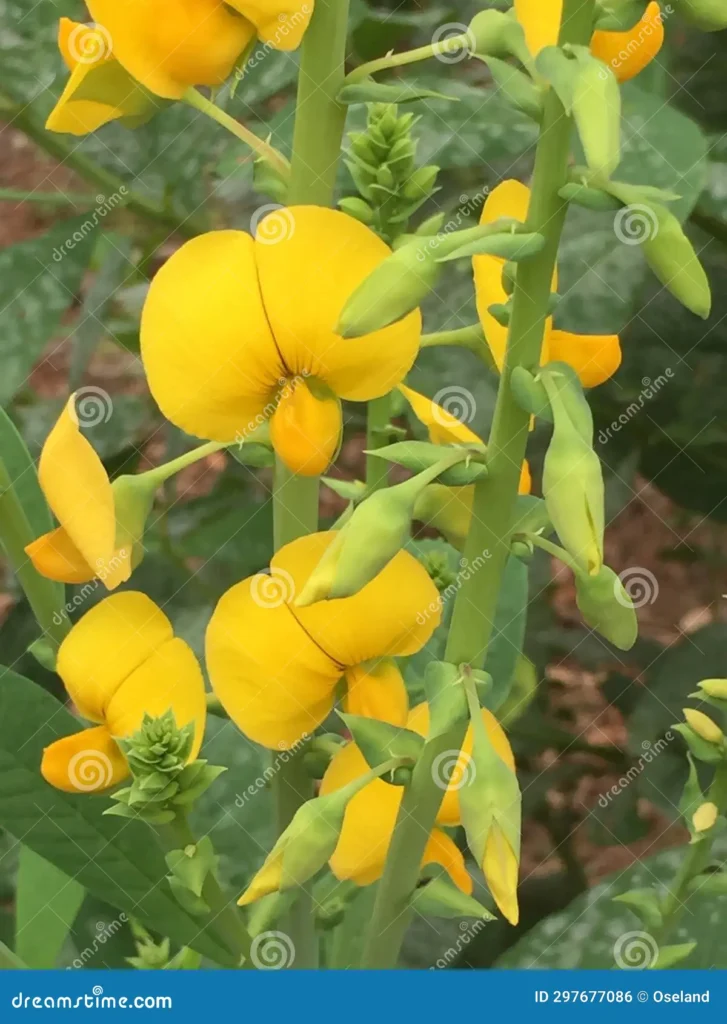
Leafy green · Research crop
Slenderleaf
Crotalaria ochroleuca / Crotalaria brevidens
The agroecological triple-threat — a nitrogen-fixing, nematode-suppressing, Striga-killing leafy vegetable that yields up to 8 tons of edible leaves per hectare.
About this crop
lenderleaf is one of the most remarkable crops in the Shiriki collection — not because of its culinary profile (which is bitter, especially in C. brevidens, and appreciated primarily by those familiar with it from East Africa), but because of what it does ecologically. It is a nitrogen-fixing legume that can yield up to 8 tons per hectare of edible leaves, fixes soil nitrogen through root nodules, actively suppresses root-knot nematode populations (a major constraint for tomatoes and other vegetables), and promotes the germination of Striga — the parasitic plant that devastates cereal crops across Africa — only to kill it by denying it a suitable host.
That combination of functions makes slenderleaf one of the most valuable crops a smallholder farmer can include in a rotation — even if the primary value is not the leaf harvest. Planted between seasons, it improves soil for every subsequent crop.
Two species are cultivated: C. ochroleuca (milder taste, preferred by younger consumers) and C. brevidens (more bitter, preferred by older generations). Both are used as leafy vegetables in Kenya, Tanzania, and Uganda, where they are cooked similarly to spinach — boiled or fried, often mixed with other vegetables to balance the bitterness.
Growing guide
Slenderleaf grows readily from direct-sown seed in warm soil. It grows to 1.2–2.5m tall, is drought-tolerant once established, and adapts to a wide range of soil conditions including poor soils. It does not tolerate frost — killed at -2°C — but handles heat well. In Gauteng, plant in spring (September–October) for best performance.
For leaf production, plant densely and harvest young leaves and shoots before flower bud stage — once flowering begins, leaves become woody and unpalatable. The plant can be cut back to encourage a second flush of tender growth. For soil improvement purposes, allow to mature and incorporate the whole plant as green manure.
Seed stores well — germination rates above 90% are documented even after 2–3 years of proper dry storage.
Research and institutional value
Slenderleaf is an active research subject in African agroecology. Its role in Striga management, nematode suppression, and nitrogen fixation makes it a co-research opportunity with ARC, UP, and GDARD researchers working on soil health and integrated pest management. Growing it at the Shiriki pilot farm while documenting soil effects creates genuine field data of scientific value.