
Plant database
A living library of African indigenous food plants — growing guides, nutritional profiles, local names, and market potential. Updated as the Shiriki pilot farm generates field data.
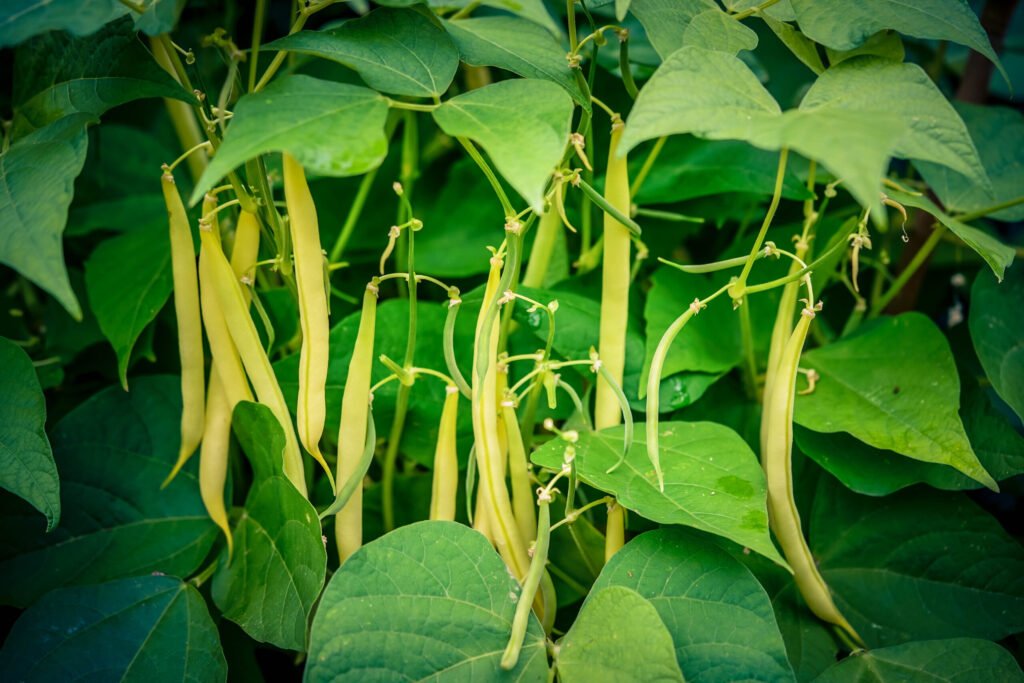
Legume · Dual use
Cowpeas
Vigna unguiculata
Africa's most versatile legume — the leaf is morogo, the bean is a staple, and the roots give back nitrogen to every crop that follows.
About this crop
Cowpeas are among the most widely grown and culturally significant crops in sub-Saharan Africa. They have been cultivated on the continent for over 5,000 years and remain a dietary staple for millions of people across 33 African countries. In South Africa, cowpea leaves — harvested and cooked as morogo — are one of the most familiar and beloved traditional vegetables, eaten throughout the country across cultural lines.
What makes cowpeas extraordinary from an agroecological perspective is nitrogen fixation. The root nodules of the cowpea plant host Bradyrhizobium bacteria that capture atmospheric nitrogen and convert it into plant-available form, enriching the soil for subsequent crops. A well-managed cowpea crop can add 40–80kg of nitrogen per hectare — reducing or eliminating the need for synthetic nitrogen fertiliser in the following season.
Growing guide
Cowpeas are warm-season crops that thrive in full sun. They can be direct-sown from seed after the last frost — in Gauteng, September to November is ideal for outdoor planting. They tolerate a wide range of soils, including poor and sandy soils, but perform best in well-drained loam with a pH of 5.5–6.5. Do not over-fertilise with nitrogen — this reduces pod production and undermines the nitrogen-fixation benefit.
For leaf production (morogo), plant densely and harvest the growing tips regularly — this encourages bushy, productive growth. For bean production, allow plants to flower and set pods, harvesting when pods begin to dry. Both uses are compatible from the same planting — harvest leaves early, then allow to bean.
Climbing varieties grown on a tunnel frame are visually spectacular and extremely space-efficient. Bush varieties are more manageable but produce less leaf volume per plant.
Dual use — corm and leaves
Cowpea leaves (morogo) are harvested when young and tender, blanched, and cooked with onion, tomato, and salt. They are one of the most nutritionally dense leafy vegetables available — higher in protein, iron, and calcium than spinach. In East Africa, they are called “sukuma wiki” (meaning “push the week” in Swahili) — eaten to extend household food through the week.
The dried bean is an excellent protein source, cooked like any dried legume — soaked overnight, boiled, used in stews or ground into flour. Black-eyed peas (the white bean with a black spot) are the most commercially recognisable cowpea variety. In West Africa, cowpea flour is used to make akara (bean fritters) and moin moin (steamed bean pudding) — both with significant diaspora market potential in Johannesburg.